Your Cart (0)



The Ethical Sparkle of Lab-Grown Diamond Engagement Rings
I tagged along with my sister one afternoon as she browsed for rings. We planned on admiring pretty settings and moving on, but the woman behind the counter surprised us. She shared stories about where diamonds originate and the people who dig them out of the earth. We had never stopped to connect a sparkling gem with sweat and soil, and that realization made us think more about what we were buying. Those questions are reshaping an industry. Today, lab grown diamond engagement rings aren’t just a gimmick — they’re part of a movement toward transparency and conscious purchasing.
The Human Story Behind a Sparkle
The origin of a gem matters because people matter. In some parts of the world, diamond profits have helped fuel wars and prop up abusive governments. The movie 'Blood Diamond' gave many of us a first look at that dark side, but those problems didn't disappear when the film ended. Reports of forced labour, violence and environmental destruction still surface. The Guardian points out that many people assume laboratory-grown diamonds are more ethical since their path can be traced and there is no colonial history of exploitation. At the same time, the paper notes that more than half of these stones come from factories in China, where conditions aren’t always well documented. In other words, buying from a lab doesn’t automatically absolve us of responsibility. We still have to ask questions and choose suppliers who treat their workers fairly.
There are bright spots. Consumer demand is shifting, and jewellers are listening. Synthetic diamonds are gaining popularity because people want the beauty of a gem without the moral baggage. Conversations I’ve had with jewellers in my hometown reflect that shift. Some of them are sourcing their stones from labs powered by renewable energy. Others have started offering both mined and lab-grown options so couples can decide where their priorities lie.
Environmental impact is another part of the story. Mining scars landscapes; it moves mountains of earth and uses diesel and water on a massive scale. Growing a diamond in a lab uses energy too, but it can be done with renewable power and without tearing up ecosystems. The Guardian’s reporting reminds readers that millions of people work in the diamond trade and that completely abandoning mines would hurt those workersThe way forward seems to lie in creating jobs in cleaner labs and improving working conditions wherever diamonds originate.
The Money Question
Cost is often the first practical question that comes up. My sister asked, “Is there really much difference in price?” There is, and it’s growing. Starting around 2016, the price of synthetic diamonds plummeted — roughly thirty percent in a single year. By the spring of 2022, a one‑carat lab-grown diamond could cost about seventy‑three percent less than a natural stone of similar quality, and jewellers saw a big jump in sales of lab-grown rings as natural diamond sales slipped. In early 2025 the gap was even wider; lab‑grown prices had fallen seventy‑four percent since 2020 because new machines can grow crystals in hours instead of weeks.
You can see what that means when you’re holding rings in your hand. A couple on a tight budget might have had to choose a small, heavily included natural diamond. With a lab-grown stone they can afford a bigger, cleaner gem and still have money left for the honeymoon. Price isn’t everything — some people still prefer a diamond formed deep in the earth — but lower costs have made the dream ring accessible to more couples.
What Makes a Diamond a Diamond?
There’s an old joke that cubic zirconia is to a diamond what margarine is to butter. That comparison doesn’t apply to lab‑grown diamonds. A diamond is a diamond when carbon atoms line up in a specific way. It doesn’t matter whether the lattice forms under volcanic pressure or inside a machine. The U.S. Federal Trade Commission updated its guidelines several years ago to emphasize that lab‑grown diamonds are real diamonds and to warn marketers not to suggest otherwise. Gem laboratories like the GIA and IGI grade lab‑grown stones alongside natural ones and laser‑inscribe the girdle with a report number and the words “laboratory grown”. Those tiny letters can’t be seen without a loupe, but they offer transparency.
As for how labs do it, there are two main methods. Lab-grown diamonds come from carbon just like mined ones. One method, often shortened to HPHT, involves pressing carbon under intense heat and pressure until it becomes a crystal. Another technique uses a vacuum chamber filled with a carbon-rich vapour that deposits on a tiny starter stone. After cutting and polishing, these grown gems look and behave like those pulled from the ground — you’d need the laser inscription or certificate to tell them apart.
Round Lab-Grown Diamond Engagement Rings: The Classic Reinvented
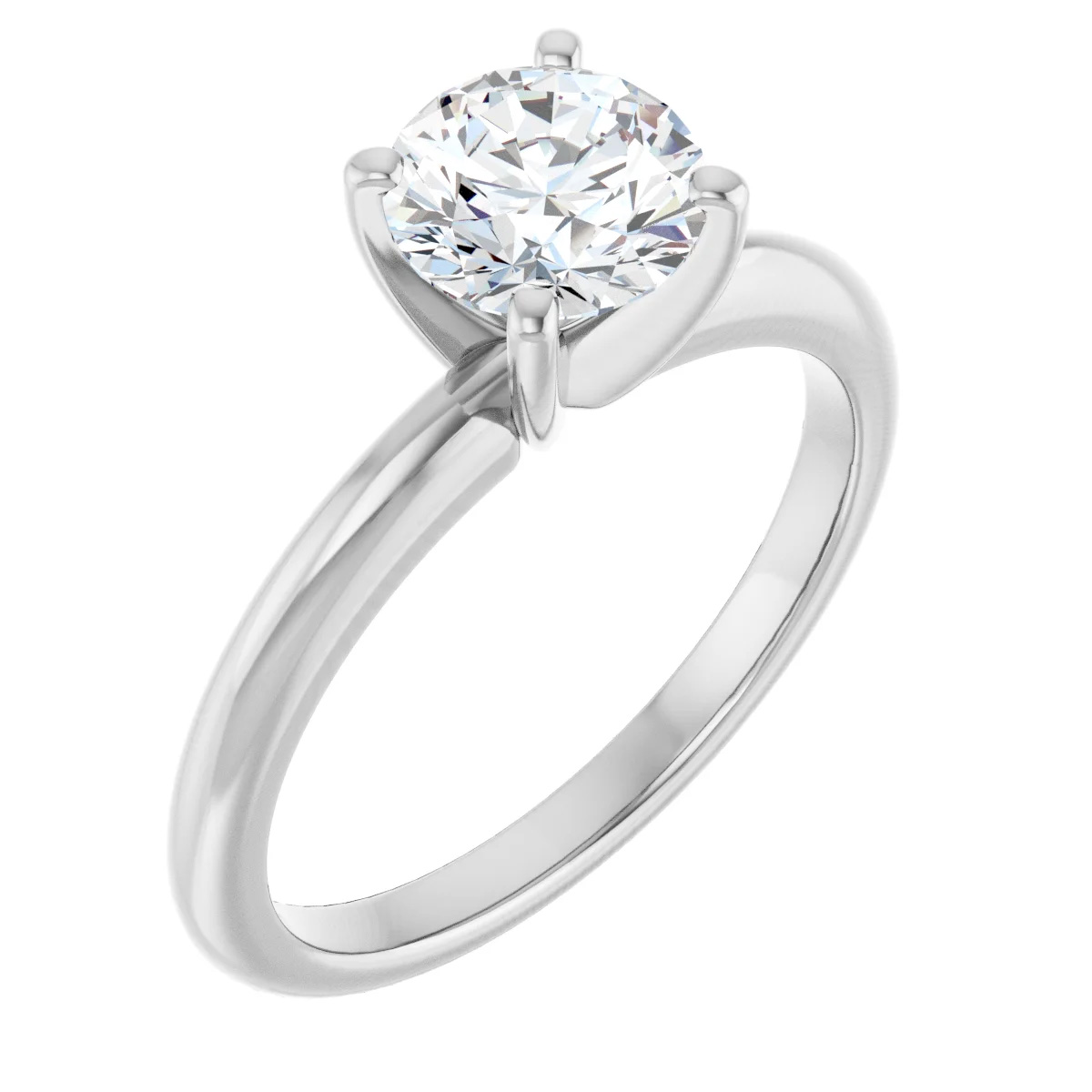
Some styles stick around because they simply work. The round brilliant is like a little engine that turns light into fire and sparkle. It has fifty‑eight facets precisely angled to bounce light around inside the stone. In the past, couples often had to pay a premium for that perfect circle because cutting a round shape wastes more rough crystal than other cuts. With round lab-grown diamond engagement rings there’s no need to compromise. My sister tried on a round solitaire with a slender band and was surprised at how much presence it had for a fraction of the expected price. Its unbroken circle also carries a nice bit of symbolism — no beginning, no end.
Princess-Cut Lab-Grown Diamond Engagement Rings: Sharp Lines and Modern Taste
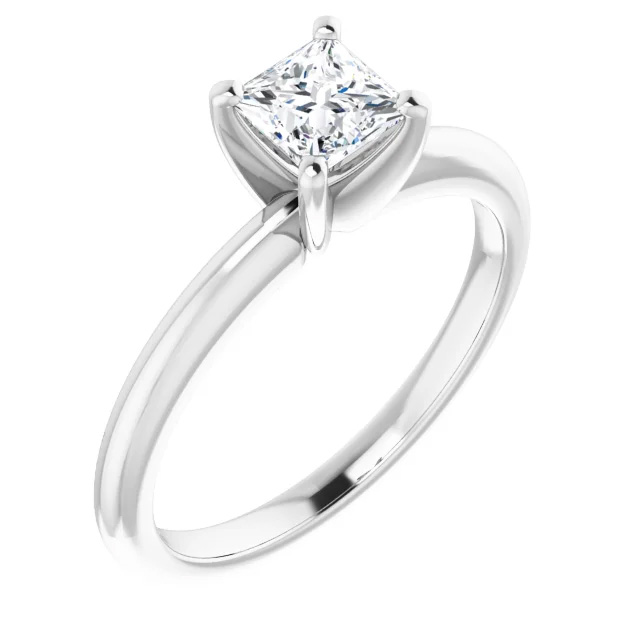
Maybe you’ve never been a fan of traditional styles. The princess cut may speak to you. Imagine a square shape with crisp corners and a glittering interior that looks almost like shattered ice. Developed in the twentieth century, it’s the most popular fancy shape today. If clean lines appeal to you, the square shape of a lab grown princess cut diamond engagement ring might be the answer. It uses more of the rough stone than a round gem, which often means better value. I like how a princess-cut diamond nestles against a wedding band — its straight edges meet the band without leaving gaps. The result is a look that feels fresh without coming off as harsh.
Lab-Grown Oval Diamond Engagement Rings: Soft, Elegant Length
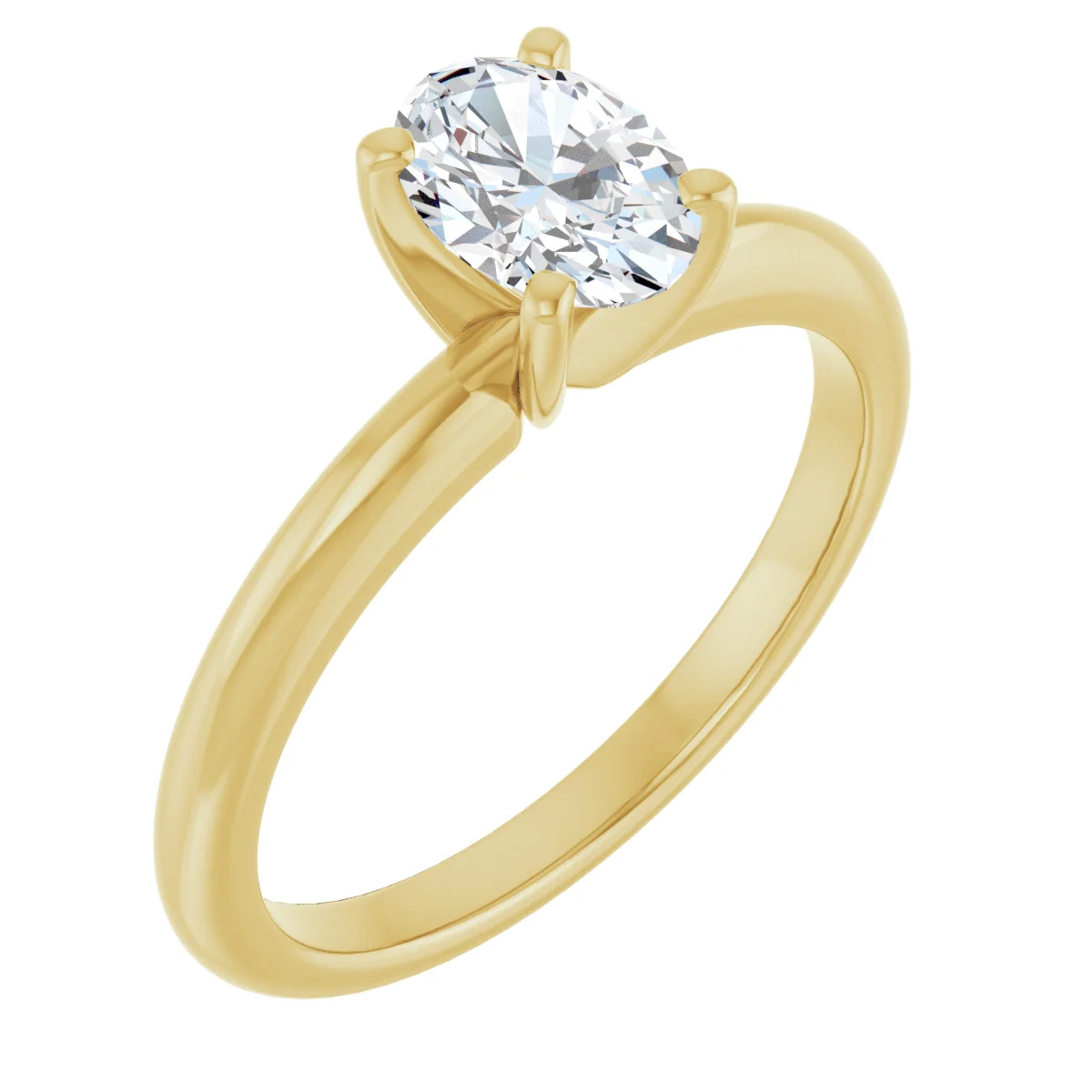
Maybe a circle feels too traditional and a square too sharp. A lab-grown oval diamond engagement ring sits happily in the middle — it sparkles like a round stone but its elongated form can make fingers appear more graceful. This shape reflects light like a round stone but has an elongated outline that can make fingers appear more graceful. The design has been around since the 1950s, although it has recently been spotted on a few celebrity hands. When my sister tried on an east–west set oval (turned sideways), the ring took on a playful blend of vintage and modern. An oval’s broader face often makes it look larger than a round or square stone of the same weight.
Lab-Grown Cushion-Cut Diamond Engagement Rings: Vintage Romance Reimagined
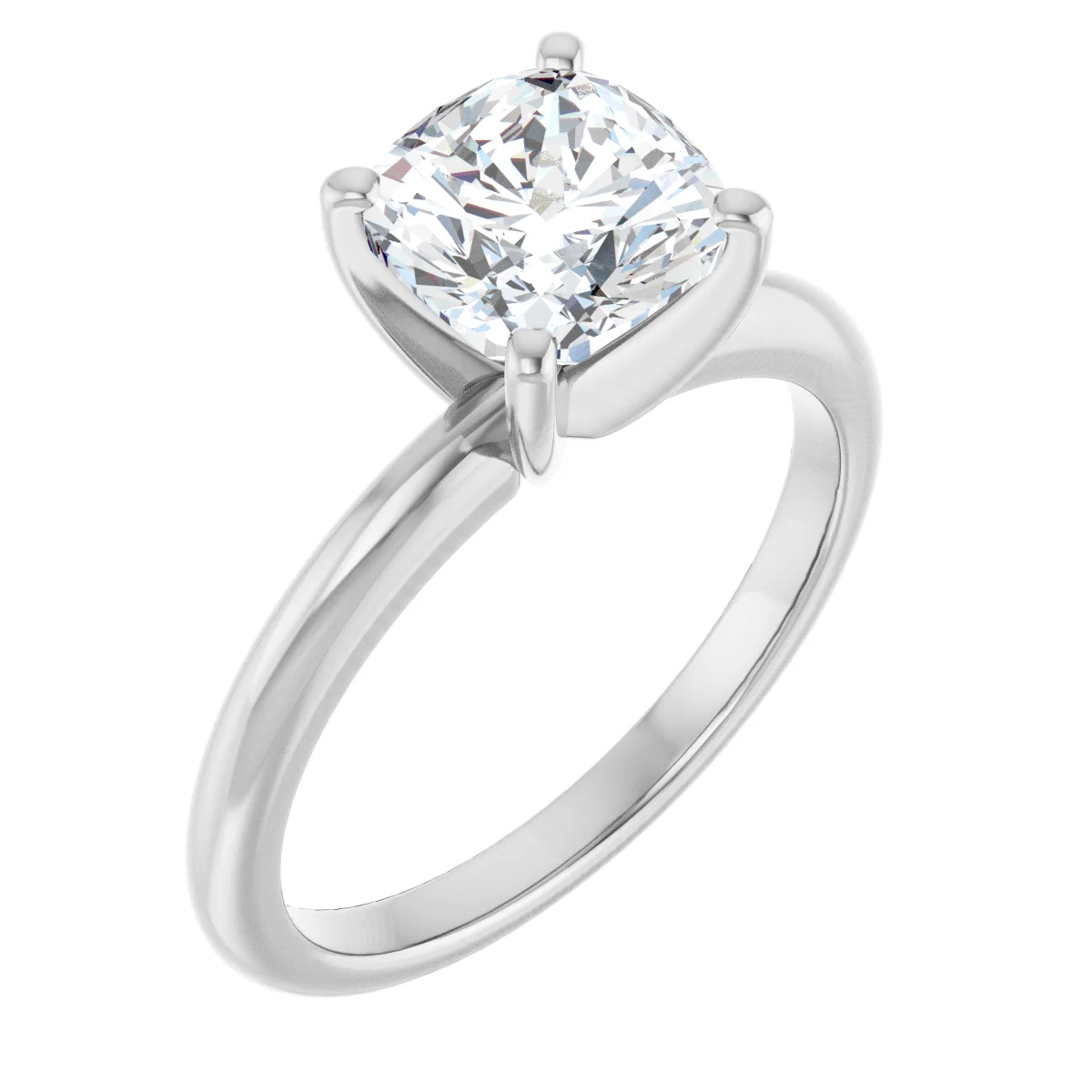
The cushion cut resembles a square with its corners rounded off. It was popular in the 1800s when people designed stones to glow under candlelight. Choosing this shape in a lab-grown cushion cut diamond engagement ring lets you enjoy that vintage romance while avoiding the environmental burden of mining. Larger facets emphasize clarity and color, and the shape pairs beautifully with halo settings or antique‑inspired details. If you’re someone who loves flea markets and heirloom style, this cut might be the sweet spot between history and modern values.
Lab-Grown Heart-Shaped Diamond Engagement Rings: Wearing Your Feelings Out Loud
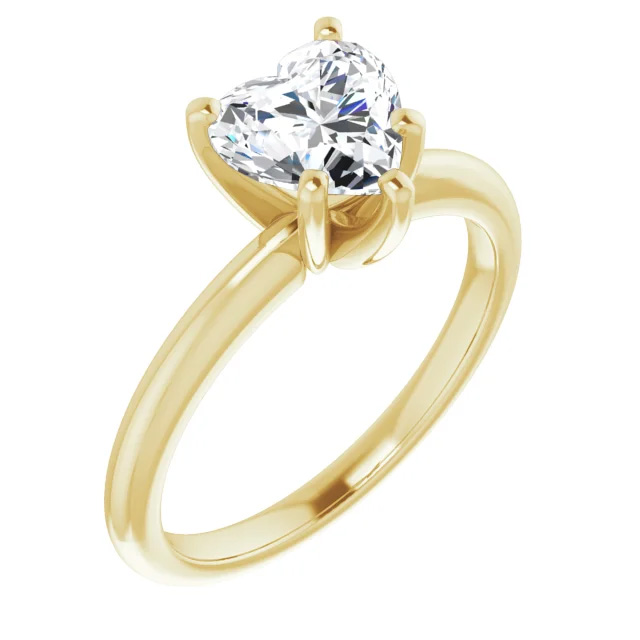
Heart‑shaped diamonds are rare in the wild and on fingers. They’re hard to cut well, and any asymmetry is obvious. That makes them perfect for individualists. A lab‑grown heart‑shaped diamond engagement ring doubles down on the romance — the shape says it all, and the choice of a lab-grown stone quietly signals that love is also about care for others. My sister laughed when she tried on a heart‑shaped diamond; it felt a bit whimsical to her. But for someone else, it could be the ideal way to make a statement.
Caring for Your Ring and Your Values
No matter which shape or origin you choose, your engagement ring will become part of your daily life. Ask the jeweller where the stone came from and how the lab was powered. Look for grading reports from reputable organizations, and don’t be afraid to compare options. After the proposal, take care of your ring. Diamonds last a long time, but the metal that holds them can get bent and everyday dirt can take the shine away. A quick soak in warm water with a drop of dish soap and a soft toothbrush makes a difference. It’s also a good idea to have a jeweller look over the setting once a year; small maintenance goes a long way. These small acts keep your ring beautiful for decades.
Redefining What’s Precious
When my sister finally picked her ring, she chose a lab-grown stone. It wasn’t a political statement so much as a gut feeling. She wanted the sparkle, she wanted the size, and she liked knowing that no one suffered to bring it to her. As she put it, “I can’t tell the difference, but I feel better about it.”
The diamond industry is evolving, and so is our idea of value. The Guardian notes that attitudes toward luxury are changing with each generation. Some people worry that a lab-grown stone won’t fetch much if you ever try to sell it; others say the sentimental meaning of a ring matters far more than its future price. To me, the ethical sparkle of a lab-grown diamond engagement ring isn’t just about the glittering facets. It’s about the stories we tell, the questions we ask and the care we show for the people and places behind our jewelry. Whatever you decide to wear, wear it with understanding and joy.
Related Posts
Recent Posts
Yellow Gold Chains You Can Wear in the Shower
Engravable Thick Gold Disc Charm Pendants: The Gift That Lasts Forever
Braided Wedding Bands Tell the Story of Two Lives Woven Into One
The Soft Strength of Women's Gold Crosses: Faith That Feels Feminine
Why 18K Gold Cross Pendants Never Go Out of Style
Why Cross-Inspired Christian Engagement Rings Are Dominating Bridal Fashion
Why Christian Patriots Are Choosing American Flag Jewelry
How Wearing a Cross Pin Can Deepen Your Daily Prayer Life
The Beautiful Story Behind Handmade Braided Wedding Bands
Why More Men Are Wearing Gold Crucifix Necklaces