Your Cart (0)



Why I’ll Never Take Off My 18K Gold Cross – Even in the Shower
Why I'll Never Take Off My 18K Gold Cross - Even in the Shower
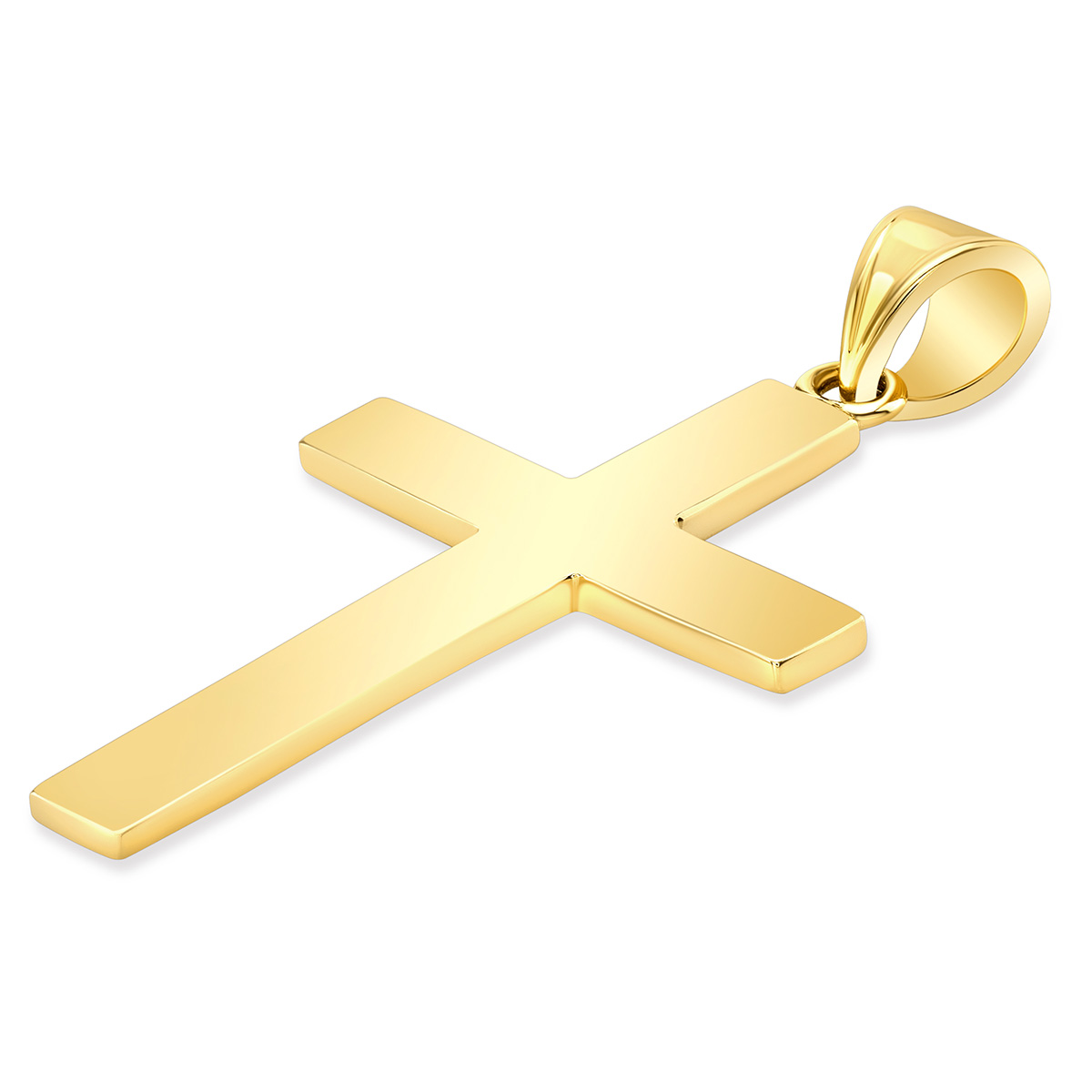
My gold cross goes where I go. It is there when I leave the house in the morning, when I sit down for dinner and when I step into the shower. Taking it off every time water is involved would turn something deeply personal into an accessory that must constantly be managed. I would rather wear it as it was meant to be worn: close to me and part of my life.
The cross carries an importance that reaches far beyond its material value. It represents the sacrifice of Jesus Christ and the faith that shapes my decisions, hopes and understanding of grace. Its place is around my neck whether anyone else sees it or whether it remains hidden beneath my shirt. The fact that it is made from 18K yellow gold makes constant wear practical even when water is involved.
There is also a simple pleasure in reaching for the pendant and finding it exactly where it belongs. Over time, the necklace becomes so familiar that its gentle weight is barely noticeable. I notice when it is missing. That is why I choose an 18K gold cross that can remain with me throughout an ordinary day, including those moments when many people automatically remove their jewelry.
Why 18K Yellow Gold Handles Water So Well
Gold has always been prized for thousands of years partly because it resists corrosion. Pure gold does not rust and it reacts with very few substances under normal conditions. Unlike metals that quickly oxidize when exposed to air or moisture, gold keeps its character. Water alone does not cause pure yellow gold to tarnish.
An 18K gold alloy contains 75 percent pure gold. The remaining 25 percent consists of metals added to improve hardness and make the jewelery suitable to regular constant wear. That high gold content gives 18K yellow gold much of the chemical stability associated with pure gold while providing greater strength than 24K.
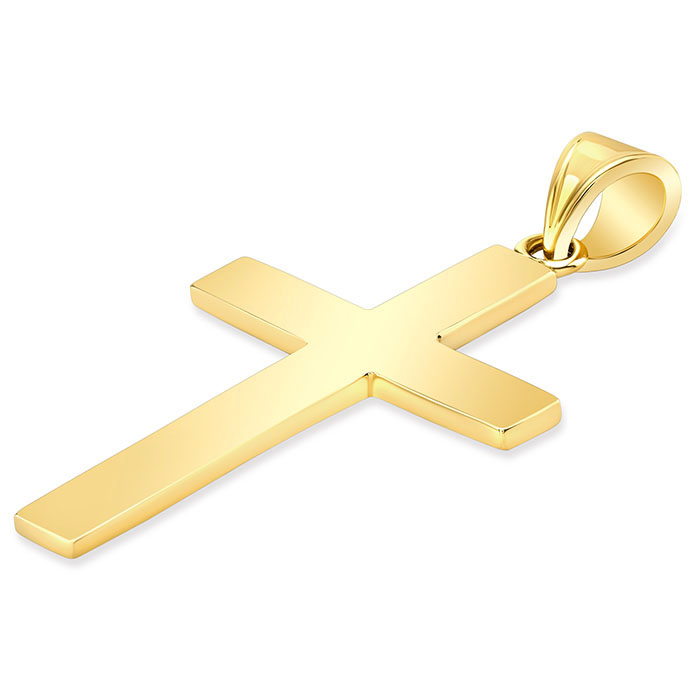
This is one reason 18K Gold Cross Pendants work so well for people who prefer to leave their jewelry on. The metal can handle routine contact with clean water without rusting, peeling or losing its yellow color. The warm shade is part of the alloy itself. It is not a thin surface color that washes away.
Yellow gold has another practical advantage. Its natural color does not depend on rhodium plating. White gold jewelry is commonly coated with rhodium to create a brighter white finishing and that surface layer can gradually wear with use. An 18K yellow gold cross presents the same gold color through the entire piece from its smooth polished exterior to the metal beneath.
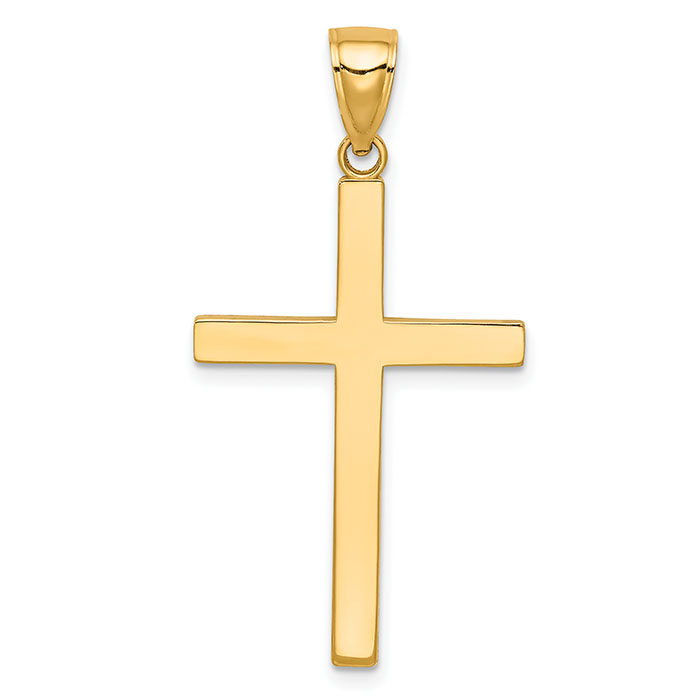
Wearing an 18K Gold Cross in the Shower
A shower is a normal part of the day and my cross stays on through it. Plain water poses no concern for solid 18K yellow gold. The high percentage of pure gold gives the pendant strong resistance to oxidation while the alloyed construction provides enough firmness for a cross designed for frequent use.
I do give the necklace a quick rinse when soap or shampoo collects around the bail or between the chain links. Soap does not ruin the gold but residue can leave a temporary film that softens its shine. Clean water removes most of it. An occasional wash with mild dish soap and a soft brush clears away anything that remains in the small spaces.
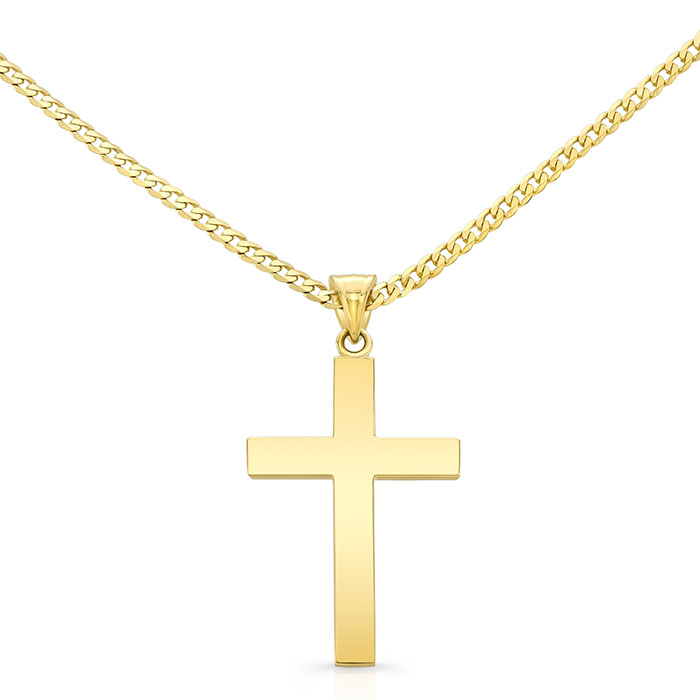
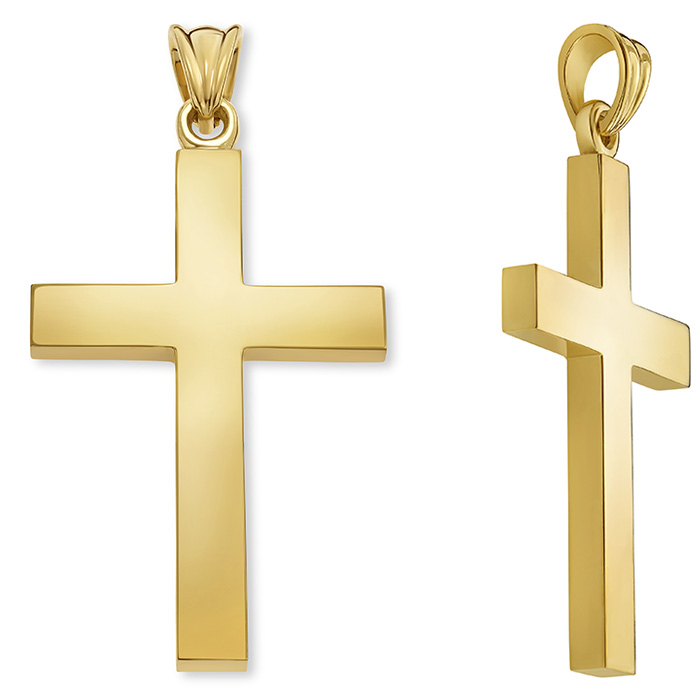
The construction of the pendant matters as much as the karat. Fully solid Gold Crosses are particularly well suited to daily constant wear because they have no hollow interior that can trap moisture, soap or debris. A fully solid cross also has a pleasing weight on the chest and can withstand years of handling when properly made.
The chain deserves attention as well. A secure clasp and a chain proportioned to the pendant make the necklace easier to wear without interruption. I prefer checking the clasp, bail and connecting ring periodically, especially if the necklace stays on during sleep and bathing. Those small points experience the most movement and keeping them in good condition protects the cross itself.

The Meaning of a Cross That Never Comes Off
Some jewelry is chosen to match an outfit. A cross occupies a different place in my life. I do not wear it because a particular shirt needs something at the neckline. I wear it because the symbol remains true on a workday, a Sunday morning, a difficult night or an uneventful afternoon at home.
Leaving the cross on reflects that consistency. Faith does not begin after getting dressed and end before stepping into the shower. The necklace follows the same rhythm. It remains against my chest when life feels ordered and when everything feels uncertain.
The polished surface changes slightly over time. Tiny marks may appear as the pendant is worn, touched and carried through thousands of ordinary moments. I do not see those marks as damage to its meaning. They record use. A cross kept permanently inside a box may retain a flawless finish but the one I wear has a story written quietly across its surface.
That personal history is why 18K Gold Cross Pendants often become cherished family pieces. A son or daughter may one day receive a cross that was worn through years of prayer, work, travel, worship and family life. Its value will not rest solely in the gold weight. It will carry the memory of the person who wore it.
Why I Chose 18K Gold Instead of a Lower Karat
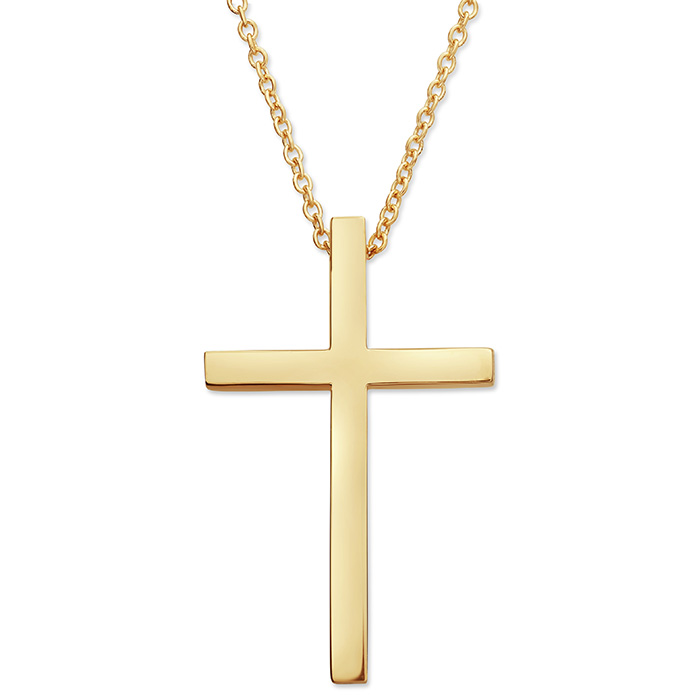
A 14K gold cross is a practical and beautiful choice but I prefer the richer yellow color of 18K gold. With three quarters of the alloy made from pure gold, 18K has a depth of color that is immediately recognizable. It looks warm without becoming overly bright and the shade works especially well with the clear uncomplicated form of a Christian cross.
The higher gold content also means less of the pendant consists of the secondary metals found in the alloy. For someone who plans to keep a necklace on during bathing, sleeping and regular activity, that composition is appealing. It provides a useful meeting point between purity and wearability.
Lower karat jewelry contains a greater proportion of alloying metals. It is generally harder but its color is usually paler and those additional metals can be more reactive than gold. Eighteen karat yellow gold retains enough hardness for fine jewelry while staying much closer in composition and color to pure gold.
My preference also comes down to how the pendant feels. A solid 18K cross has a satisfying density. It rests securely rather than feeling insubstantial and the weight gives the piece a sense of permanence. Since I intend to wear it for years, choosing the metal I genuinely prefer is worth it.
How 22K Gold Crosses Compare in Water
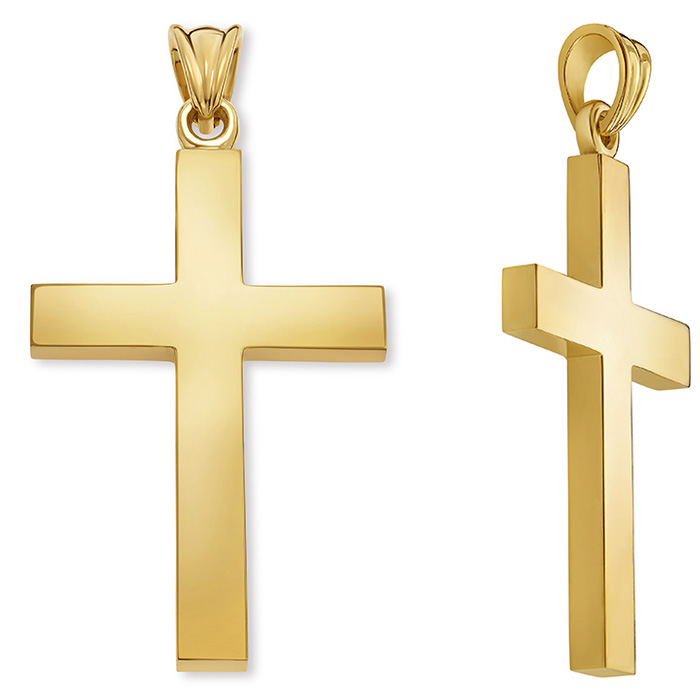
For shoppers who want an even higher gold content, 22K Gold Crosses offer a striking alternative. Twenty two karat gold is approx. 91.7 percent pure gold, bringing it very close to the rich color and water resistance of pure 24K gold. Its deep yellow shade is hard to mistake for any other metal.
The additional purity means that 22K gold is softer than 18K. A well made 22K cross can still be worn regularly, particularly when it has substantial thickness and fully solid construction. Its surface will develop signs of wear more readily to give the pendant a softer lived in appearance over time.
Water itself presents no problem for solid 22K yellow gold. Its very high gold content makes it exceptionally resistant to corrosion and tarnishing during normal contact with water. As with 18K jewelry, rinsing away soap residue helps preserve the clean finish.
Choosing between 18K Gold Cross Pendants and 22K Gold Crosses comes down to color, purity and the type of wear expected. I favor 18K because it offers a rich gold tone with added firmness for a necklace that rarely leaves my neck. Someone drawn to the deeper color and greater purity of 22K may find that option equally meaningful.

Caring for Gold Crosses Worn Every Day
Constant wear does not require complicated care. After a shower, I make sure the chain is rinsed well and allow it to dry naturally. Every so often, I clean the pendant in warm water with a small amount of mild dish soap. A very soft toothbrush helps remove buildup around the bail, jump ring and the narrow places where the crossbar meets the vertical beam.
A soft jewelry cloth restores the surface after cleaning. For deeper polishing or an inspection of the chain and bail, a professional jeweler can check the piece and address wear before it develops into a larger issue. This is especially useful for a necklace worn while sleeping, exercising and bathing.
Solid yellow Gold Crosses are uncomplicated pieces by nature. They have no plating to preserve and no complicated surface treatment required to maintain their color. Good construction, sensible cleaning and occasional inspection are usually enough to keep one ready for years of continuous use.
An 18K Gold Cross Made to Stay Close
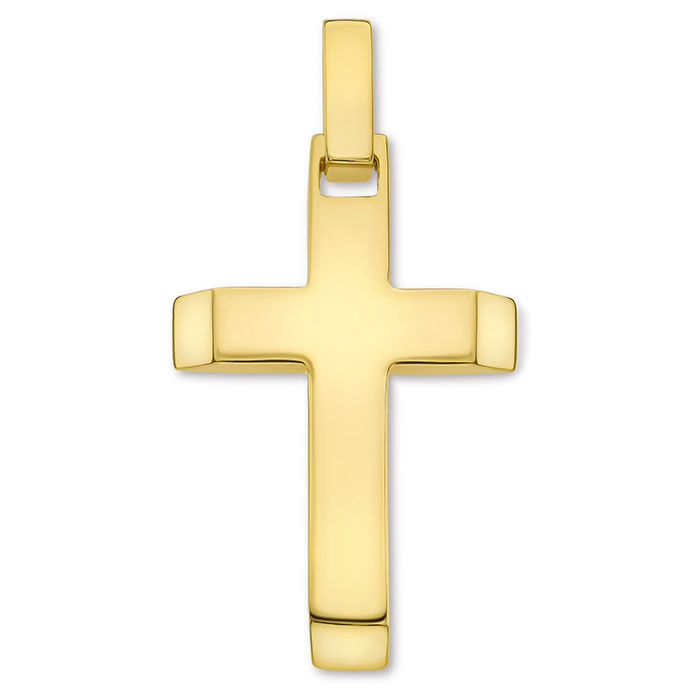
I chose an 18K yellow gold cross because its material and meaning belong together. Gold resists decay, holds its color and has been used for treasured objects across generations. The cross represents a faith founded upon a promise that does not change.
So I leave mine on. It stays with me through water, work, rest and worship. I clean it when needed, check the chain and continue wearing it. Its place is close to my heart and that is where it will remain.
Related Posts


Recent Posts
Why Braided Wedding Bands Are the Most Romantic Twist on Tradition
Why a Gold Cross Necklace Is the Most Meaningful Piece in Your Jewelry Box
The Platinum Chain Necklace That Instantly Makes Any Outfit Look Expensive
Why a Gold Crucifix Necklace Is the Most Powerful Piece You’ll Own
The Hidden Power of Wearing a Gold Cross Necklace Every Day
Why I’ll Never Take Off My 18K Gold Cross – Even in the Shower
Men's 14K White Gold Cross Necklace with Round Box Chain
Yellow Gold Chains You Can Wear in the Shower
Engravable Thick Gold Disc Charm Pendants: The Gift That Lasts Forever
Braided Wedding Bands Tell the Story of Two Lives Woven Into One